Would you like to switch to the accessible version of this site?

Go to accessible site Close modal window

Don't need the accessible version of this site?

Hide the accessibility button Close modal window
Accessibility View Close toolbar
  • Home
  • New Patient Center
    • Online Forms
  • Eyecare Services
    • Contact Lens Exams
    • Eye & Vision Exams
    • Lasik Eye Surgery
  • Frame Selection
  • Insurance & Payments
  • About Us
    • Meet The Optometrists
    • Meet The Staff
  • Contact Us
  • Whats New
  • Community Content
    • Common Eye Conditions
      • Age-Related
      • Cognitive and Acquired
      • Vision Impairment
      • Injury & Irritation
      • Eye Lids
      • Changes in Appearance
    • Contact Lenses
    • Eye Diseases
    • Eyeglasses
      • Eyeglass Lenses
    • Eye Symptoms
    • How the Eyes Work
      • Basic Visual Skills
    • Pediatric Vision
    • Protecting Your Eyes
    • Visual Rehabilitation
    • Vision Problems
    • What is Vision Therapy
    • Vision Therapy Programs
    • We Can Help With
      • Cataracts
      • Corneal Disorders
        • Disorders
      • Glaucoma
      • Refractive Disorders
      • Adult Strabismus
      • Retinal Disorders
    • Newsletters
      • Glasses & Frames
      • Contacts
      • Tips for Healthy Eyes
      • Conditions That Affect Vision
      • Kid's Vision
      • Amazing, Interesting Eyes
      • Medical Perspectives
Enfield Eye Care Associates

(860) 749-0757

Menu
No social media links found. Please configure it

(860) 749-0757

CALL (860) 749-0757 TO MAKE AN APPOINTMENT.

Fill out the form below to sign up for our email list.

Error!

    • Home >
    • Articles >
    • We Can Help With >
    • Cataracts >
    • Cataract Surgery

    Cataract Surgery

    • Created in We Can Help With, Cataracts
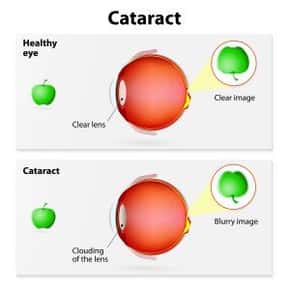
    chart displaying what cataract is

    With cataract surgery, your ophthalmologist removes the cataract-diseased lens of your eye. The ophthalmologist then replaces your natural lens with an artificial one.

    The Procedure

    This outpatient procedure is generally safe and takes less than an hour. Your ophthalmologist will dilate your pupil with eye drops and administer local anesthetic eye drops. You may also be prescribed a sedative to counter anxiety.

    Once your eye surgeon has made a small, self-sealing incision in the eye, he or she performs a step called phacoemulsification. During this step of the procedure, the ophthalmologist inserts a thin probe into the cataractous lens and uses ultrasound waves to break it up, before suctioning out the pieces.

    Once your eye surgeon removes your cataract, he or she implants an intraocular lens (IOL). IOLs come in a wide variety of materials and functions. Some help with both near and distant vision, similar to bifocals. Others block ultraviolet light. You and your doctor will discuss the best type for you.

    If you need cataract surgery in both eyes, your doctor will likely recommend doing one at a time, with a healing period in between.

    Recovery

    Usually, you can go home on the day of your surgery. However, you’ll need to arrange for somebody to drive you home from the surgical facility. You might also need help around the house, as your doctor may restrict bending and lifting for a few days.

    Expect mild discomfort, light sensitivity, fluid discharge and itching for a few days after surgery. For a short period of time after surgery, you may need to wear a patch or eye shield while sleeping or take medications that control eye pressure.

    Your eye doctor will schedule follow-up visits to monitor your progress. Once healed, you’ll get a new prescription for eyeglasses, if necessary.

    After surgery, some people develop a secondary cataract, also called posterior capsule opacification. Eye surgeons can usually treat a secondary cataract with a quick, painless outpatient procedure.

    Risks

    Cataracts are usually treated safely and successfully. However, risks — while uncommon — do exist. These include swelling, infection, inflammation, retinal detachment, glaucoma and loss of vision. People with serious medical conditions or other eye diseases are at increased risk of complications.

    If you suspect you need cataract surgery, call us today to discuss your options.

    • Common Eye Conditions
      • Age-Related
      • Cognitive and Acquired
      • Vision Impairment
      • Injury & Irritation
      • Eye Lids
      • Changes in Appearance
    • Contact Lenses
    • Eye Diseases
    • Eyeglasses
      • Eyeglass Lenses
    • Eye Symptoms
    • How the Eyes Work
      • Basic Visual Skills
    • Pediatric Vision
    • Protecting Your Eyes
    • Visual Rehabilitation
    • Vision Problems
    • What is Vision Therapy
    • Vision Therapy Programs
    • We Can Help With
      • Cataracts
      • Corneal Disorders
        • Disorders
      • Glaucoma
      • Refractive Disorders
      • Adult Strabismus
      • Retinal Disorders
    • Newsletters
      • Glasses & Frames
      • Contacts
      • Tips for Healthy Eyes
      • Conditions That Affect Vision
      • Kid's Vision
      • Amazing, Interesting Eyes
      • Medical Perspectives

    Hours of Operation

    Our Regular Schedule - By appointment only due ot COVID-19

    Monday:

    By Appointment Only

    8:00 AM-7:00 PM

    Tuesday:

    By Appointment Only

    8:00 AM-6:00 PM

    Wednesday:

    By Appointment Only

    8:00 AM-6:00 PM

    Thursday:

    By Appointment Only

    8:00 AM-6:00 PM

    Friday:

    By Appointment Only

    8:00 AM-2:00 PM

    Saturday:

    By Appointment Only

    8:00 AM-2:00 PM

    Sunday:

    Closed

    Location

    Find us on the map

    • Copyright © 2026 MH Sub I, LLC dba iMatrix.
    • Admin Log In
    • Site Map