Would you like to switch to the accessible version of this site?

Go to accessible site Close modal window

Don't need the accessible version of this site?

Hide the accessibility button Close modal window
Accessibility View Close toolbar
  • Home
  • New Patient Center
    • Online Forms
  • Eyecare Services
    • Contact Lens Exams
    • Eye & Vision Exams
    • Lasik Eye Surgery
  • Frame Selection
  • Insurance & Payments
  • About Us
    • Meet The Optometrists
    • Meet The Staff
  • Contact Us
  • Whats New
  • Community Content
    • Common Eye Conditions
      • Age-Related
      • Cognitive and Acquired
      • Vision Impairment
      • Injury & Irritation
      • Eye Lids
      • Changes in Appearance
    • Contact Lenses
    • Eye Diseases
    • Eyeglasses
      • Eyeglass Lenses
    • Eye Symptoms
    • How the Eyes Work
      • Basic Visual Skills
    • Pediatric Vision
    • Protecting Your Eyes
    • Visual Rehabilitation
    • Vision Problems
    • What is Vision Therapy
    • Vision Therapy Programs
    • We Can Help With
      • Cataracts
      • Corneal Disorders
        • Disorders
      • Glaucoma
      • Refractive Disorders
      • Adult Strabismus
      • Retinal Disorders
    • Newsletters
      • Glasses & Frames
      • Contacts
      • Tips for Healthy Eyes
      • Conditions That Affect Vision
      • Kid's Vision
      • Amazing, Interesting Eyes
      • Medical Perspectives
Enfield Eye Care Associates

(860) 749-0757

Menu
No social media links found. Please configure it

(860) 749-0757

CALL (860) 749-0757 TO MAKE AN APPOINTMENT.

Fill out the form below to sign up for our email list.

Error!

    • Home >
    • Articles >
    • Common Eye Conditions >
    • Changes in Appearance >
    • Subconjunctival Hemorrhage

    Subconjunctival Hemorrhage

    • Created in Common Eye Conditions, Changes in Appearance

    subconjunctival hemorrhage

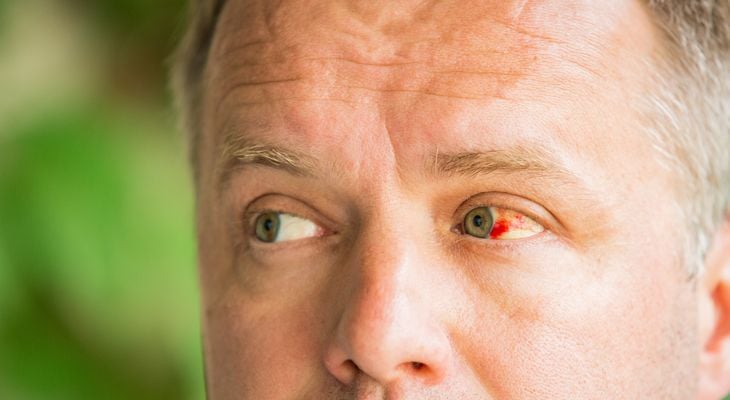
    Similar to a bruise under the skin, a subconjunctival hemorrhage happens when a small blood vessel located between the sclera (white portion of an eye) and the conjunctiva (lining on the surface of an eye) breaks and covers the sclera with blood. Unlike broken blood vessels located under the skin which take on shades of black, blue, and green, a subconjunctival hemorrhage located under the clear conjunctiva has a bright red appearance initially, and slowly fades to orange and yellow, as the tissue of the eye absorbs the blood.

    Subconjunctival Hemorrhage Symptoms

    Usually painless upon occurrence, a subconjunctival hemorrhage typically goes unnoticed until the individual looks in the mirror or someone else points out the red spot on the eye. Subconjunctival hemorrhage has few symptoms, and mostly affects a person's appearance and sometimes self-esteem. The hemorrhage, however, can cause a full sensation on the surface of the eye or a feeling of eye awareness when blinking. It can also cause slight irritation or a feeling of grittiness. Subconjunctival hemorrhage should not affect vision, cause pain, or lead to any changes in eye discharge.

    Subconjunctival Hemorrhage Causes and Risk Factors

    The specific cause of subconjunctival hemorrhage is not always apparent. Extremely delicate, the blood vessels of the eyes rupture easily and can break under the pressure of a powerful sneeze, violent coughing, vomiting, or strain from activities like weight lifting. Subconjunctival hemorrhage can also result from an injury to the eye in cases of excessive eye rubbing, inserting contact lenses, or through some other trauma. In addition, a viral or bacterial infection of the eye such as conjunctivitis can cause a subconjunctival hemorrhage.

    Certain medications or medical conditions can predispose an individual to recurrent subconjunctival hemorrhages. These conditions include diabetes, high blood pressure or hypertension, blood clotting disorders, and blood thinning medications like aspirin or Coumadin.

    Diagnosis and Treatment

    An eye care professional will diagnose subconjunctival hemorrhage by observation. If a trauma or injury to the eye is pinpointed as the cause of the subconjunctival hemorrhage, a more comprehensive eye exam will be necessary to check for further damage. Like bruises on the skin, subconjunctival hemorrhages clear up on their own without additional treatment. The blood will eventually absorb back into the eye and disappear. If caused by an infection or underlying medical condition, treatment for that underlying medical problem will be necessary.

    • Common Eye Conditions
      • Age-Related
      • Cognitive and Acquired
      • Vision Impairment
      • Injury & Irritation
      • Eye Lids
      • Changes in Appearance
    • Contact Lenses
    • Eye Diseases
    • Eyeglasses
      • Eyeglass Lenses
    • Eye Symptoms
    • How the Eyes Work
      • Basic Visual Skills
    • Pediatric Vision
    • Protecting Your Eyes
    • Visual Rehabilitation
    • Vision Problems
    • What is Vision Therapy
    • Vision Therapy Programs
    • We Can Help With
      • Cataracts
      • Corneal Disorders
        • Disorders
      • Glaucoma
      • Refractive Disorders
      • Adult Strabismus
      • Retinal Disorders
    • Newsletters
      • Glasses & Frames
      • Contacts
      • Tips for Healthy Eyes
      • Conditions That Affect Vision
      • Kid's Vision
      • Amazing, Interesting Eyes
      • Medical Perspectives

    Hours of Operation

    Our Regular Schedule - By appointment only due ot COVID-19

    Monday:

    By Appointment Only

    8:00 AM-7:00 PM

    Tuesday:

    By Appointment Only

    8:00 AM-6:00 PM

    Wednesday:

    By Appointment Only

    8:00 AM-6:00 PM

    Thursday:

    By Appointment Only

    8:00 AM-6:00 PM

    Friday:

    By Appointment Only

    8:00 AM-2:00 PM

    Saturday:

    By Appointment Only

    8:00 AM-2:00 PM

    Sunday:

    Closed

    Location

    Find us on the map

    • Copyright © 2026 MH Sub I, LLC dba iMatrix.
    • Admin Log In
    • Site Map