
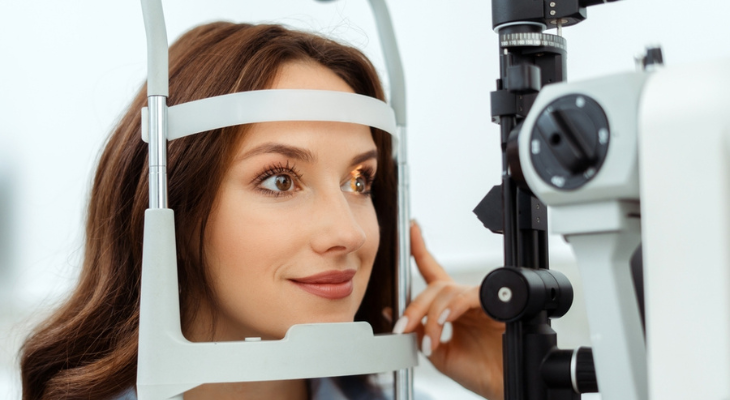
Can an Eye Exam Reveal Heart Problems?
Clearer vision isn't the only benefit of scheduling an annual visit to your optometrist. Eye exams also offer important information about the health of your heart. During your exam, your optometrist will look for these common heart disease signs:
A Ring Around Your Cornea
A white, blue, or gray ring around your cornea, the clear tissue covering your iris and pupil, isn't automatically a cause for concern. The rings tend to be related to aging, but can also develop in younger people. In some cases, a ring, or arcus senilis, may be a sign that you have high cholesterol, a condition that affects almost 40% of Americans, according to the Centers for Disease Control and Prevention.
If your "bad" cholesterol level is too high, fatty plaque begins to build up in your blood vessels, including those in your eyes. Plaque prevents normal blood flow and can be a factor in heart failure or heart attack.
Changes in the Retina
A healthy retina is essential for good vision. This layer of cells at the back of the eye captures light rays and converts them to electrical signals that the brain uses to create images.
If you have heart disease, your optometrist may notice these changes in your eyes:
- Red or White Spots. Dilating your pupils with special eye drops helps your eye doctor see your retina clearly and detect signs of trouble, such as red or white spots. The spots may mean that an artery in your retina is blocked due to a heart valve or rhythm issue, a tumor or carotid artery disease, a disease that happens when fatty plaque clogs blood vessels. Blockages in branch arteries may only cause mild blurriness or might not cause any noticeable vision changes. If the central retinal artery is blocked, sudden loss of vision can occur.
- Lesions. Tiny lesions on your retina could occur if cells die when blood vessels are blocked. These lesions, which eye doctors call retinal ischemic perivascular lesions, are significantly associated with atrial fibrillation (AFib), according to the research published in the Journal of the American Heart Association in 2023. AFib is a rapid, irregular heart rate that affects blood flow to the heart. It can raise your risk of stroke, heart failure, or blood clots.
Bumpy Eyelids
Do you have yellow bumps on your eyelids? Called xanthelasma, the bumps are another sign of high cholesterol but may also form if you have high blood pressure or diabetes. Xanthelasma may be unsightly, but luckily, they won't cause any changes in your vision.
Preventing new bumps is as simple as getting your cholesterol under control. While improving your cholesterol will stop new bumps from appearing, existing bumps are here to stay unless you have a procedure to remove them. Xanthelasma can be removed with traditional or laser surgery, cryotherapy (freezing), chemical peels, or an electric needle, according to the American Academy of Ophthalmology.
Drusen
Like xanthelasma, drusen are fatty deposits. Drusen, unlike xanthelasma, form inside your eye. The yellow deposits collect under the macula and are made up of fatty compounds and proteins. The macula, located in the center of the retina, is essential for color and central vision.
Drusen are often found in people who have age-related macular degeneration (AMD). Dry AMD happens when cells in the macula die, while wet AMD occurs due to the growth of abnormal blood vessels that leak blood or fluid. AMD can cause blurry vision and blind or dark spots in your central vision.
In some cases, drusen may be a sign of heart disease, according to research from doctors at New York Eye and Ear Infirmary of Mount Sinai. Their study, which was published in Retina in 2022, noted that subretinal drusenoid deposits (SDD) are linked with blood vessel diseases. SDD are a lesser-known type of drusen that can only be detected with special eye tests.
Regular eye exams not only help you protect your vision but offer an important means of early detection for heart problems. Ready to schedule your visit? Contact our office to make a convenient appointment.
Sources:
Journal of the American Heart Association: Retinal Ischemic Perivascular Lesions in Individuals with Atrial Fibrillation, 8/14/2023
https://www.ahajournals.org/doi/10.1161/JAHA.122.028853
Centers for Disease Control and Prevention: Cholesterol, 9/6/2023
https://www.cdc.gov/cholesterol/index.htm
Mt. Sinai Health System: Blinding Eye Disease Is Strongly Associated With Heart Disease and Stroke, 7/12/2022
American Academy of Ophthalmology: What Is Xanthelasma?, 5/12/2021
https://www.aao.org/eye-health/diseases/what-is-xanthelasma
American Academy of Ophthalmology:What Is Arcus Senilis?, 4/26/2019
https://www.aao.org/eye-health/diseases/what-is-arcus-senilis
All About Vision: What Your Eye Doctor Can Tell About Your Heart Health, 2/2/2022
https://www.allaboutvision.com/conditions/related/how-eyes-can-reveal-heart-problems